Understand the Language of Play
Learn why play can become an important medium for expression, and what makes it therapeutic rather than simply recreational.

Online Professional Training, Working With Children
Play Therapy for children: the reasoning behind purposeful therapeutic play with kids, in ten structured chapters.
Today
One-time payment, no subscription [CONFIRM BEFORE PUBLISHING]

A course about children: how kids communicate through play, and how to respond.
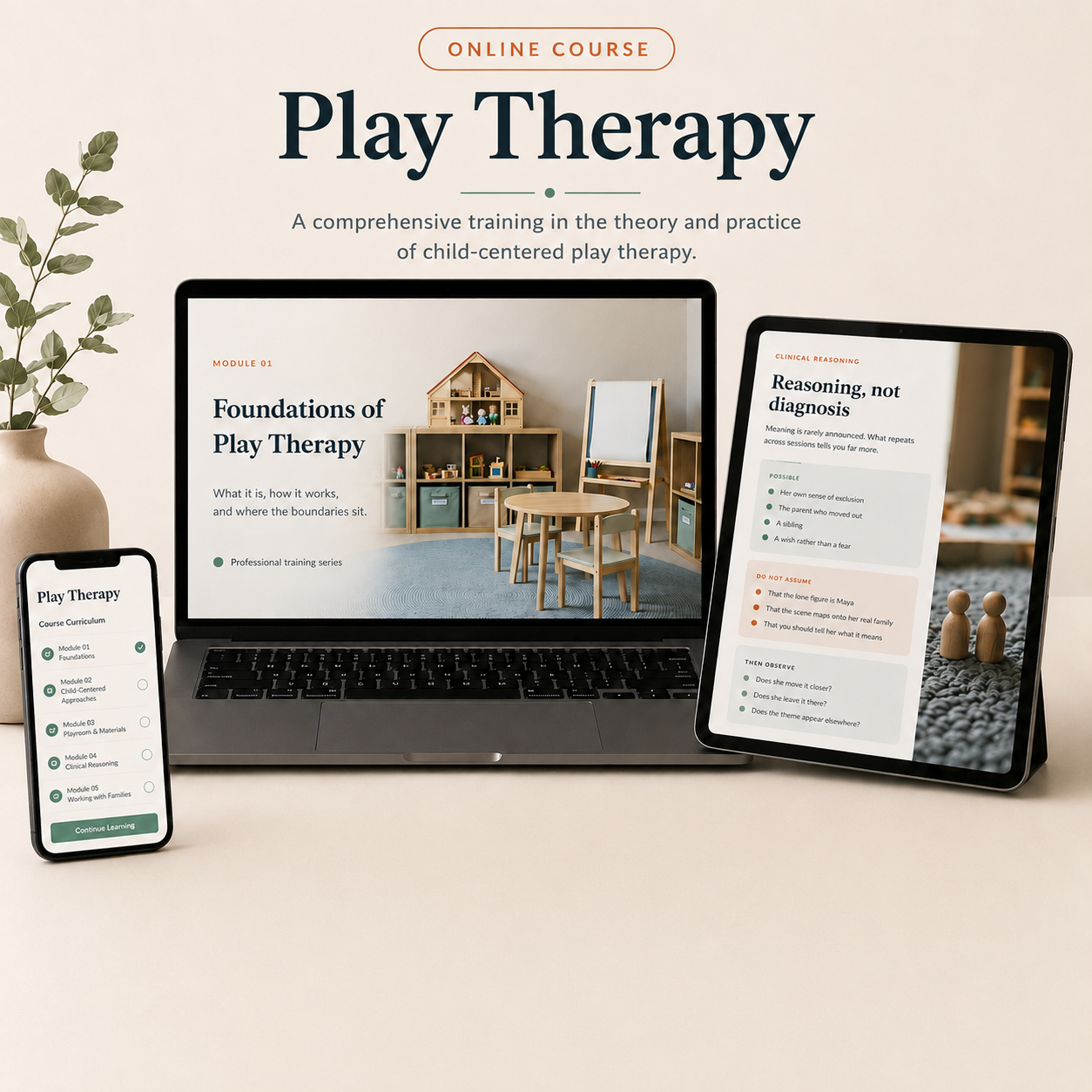
10
Chapters
100%
Online
Video
Structured Curriculum
Clear learning progression
Clear Framework
Connect concepts to practice
Online Access
Learn from any device
Practical Focus
Concepts connected to real situations
The Foundation
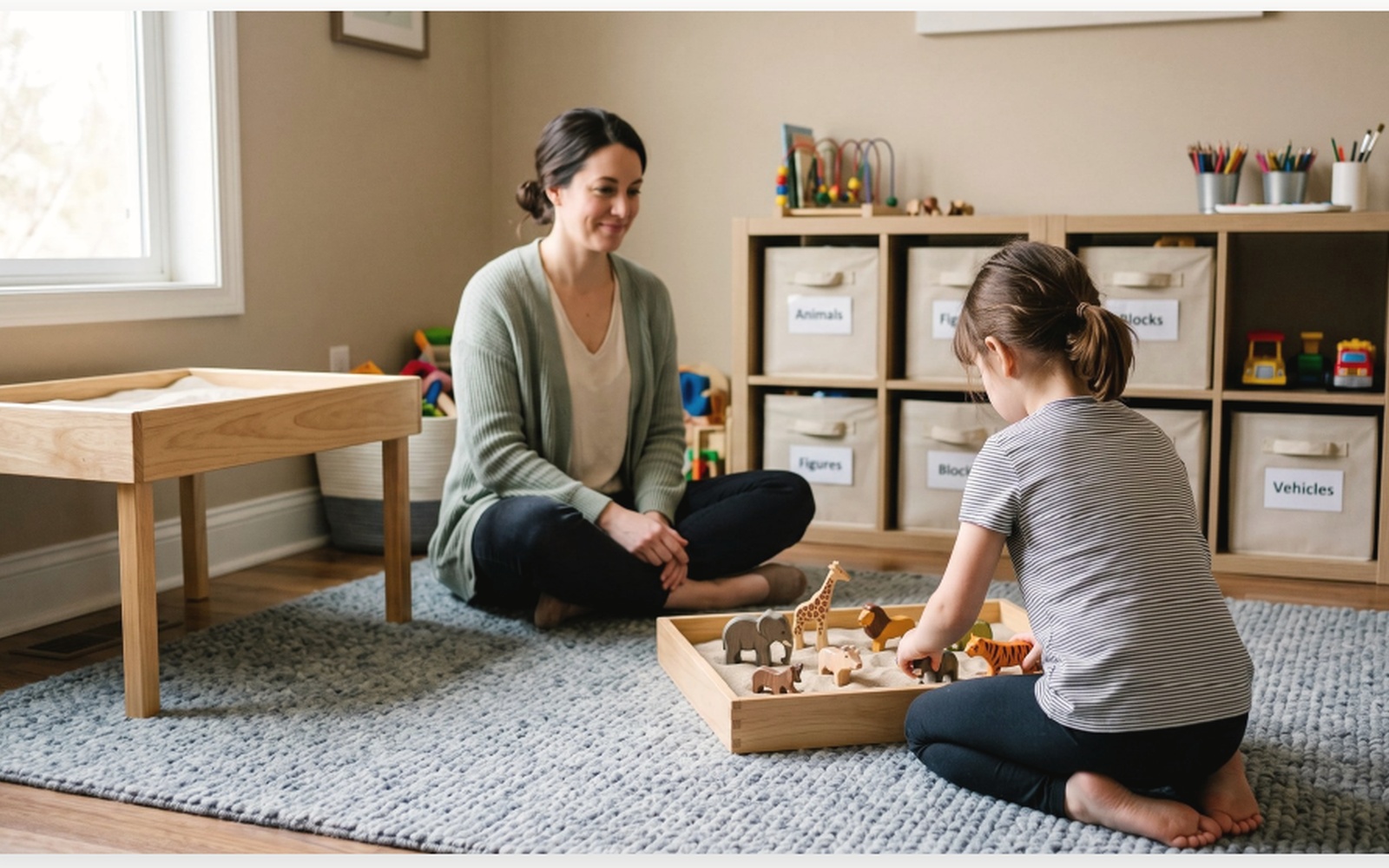
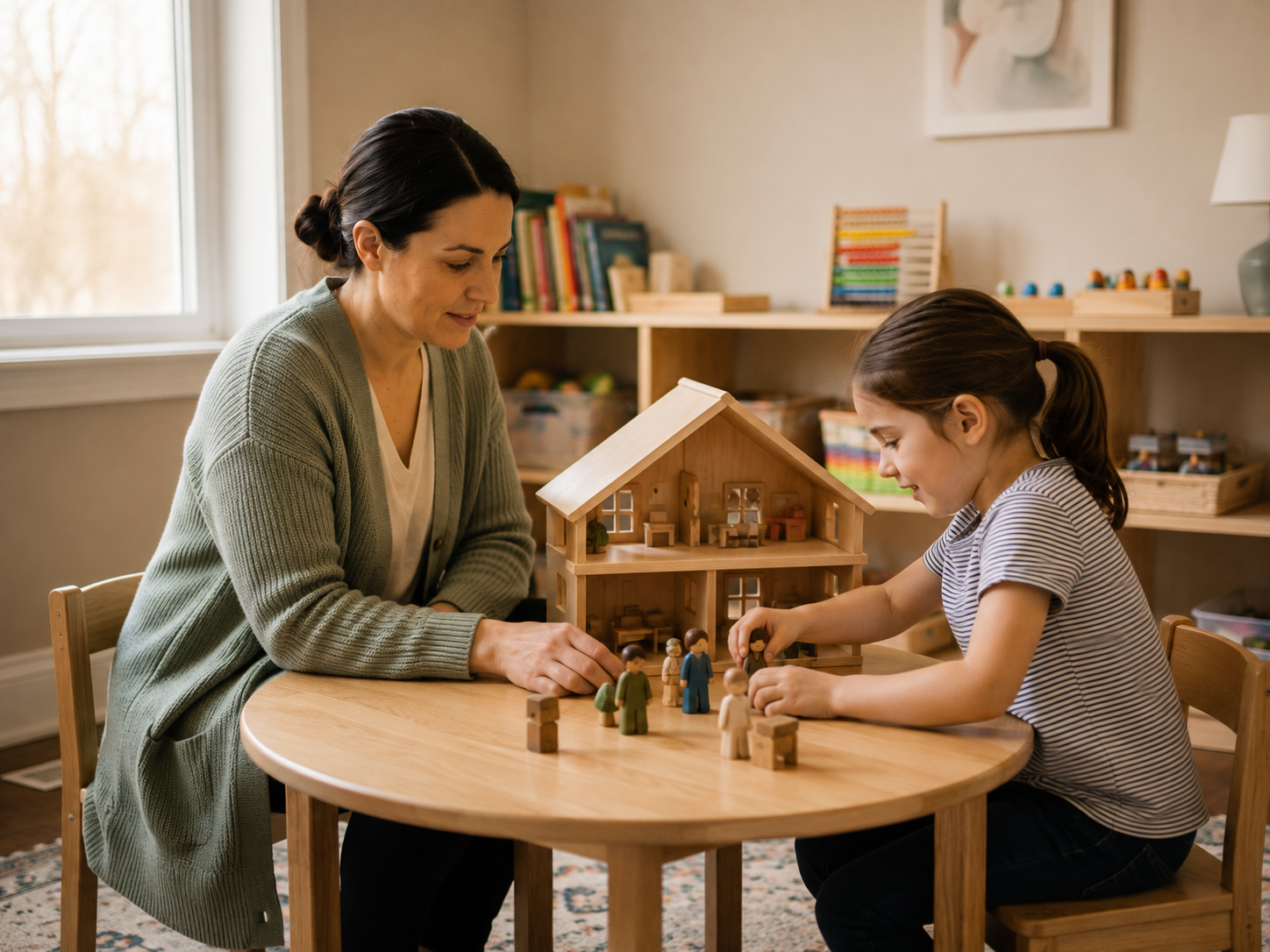
Children do not always communicate difficult experiences through direct conversation. Sometimes communication appears through stories, movement, repetition, objects, choices and play.
Understanding therapeutic play requires more than knowing activities. It requires understanding what to observe, what not to assume, how developmental context changes interpretation and how different therapeutic approaches influence the session.
This course organizes those concepts into one structured learning path.
Why It Matters
A child may not yet have the language, or the developmental ability, to explain complex feelings directly. Play can open another avenue of expression, one that does not depend on finding the right words.
But an avenue of expression is only useful when the professional understands how to stay with it. That means holding the difference between:
This is where structured Play Therapy education matters.
What You Gain
Learn why play can become an important medium for expression, and what makes it therapeutic rather than simply recreational.
Understand the purpose and therapeutic reasoning behind different approaches instead of collecting techniques.
Learn why observations need developmental, relational and situational context before they mean anything.
Move from disconnected techniques to a clear model of therapeutic thinking you can keep returning to.
The Difference
Activity lists are easy to find. The harder part is the reasoning that sits underneath every decision in a session, the questions a practitioner keeps asking while the play unfolds.
The Institute for Play Therapy was built to help connect those decisions.
Inside the Course
A short look at the depth and structure of the training.
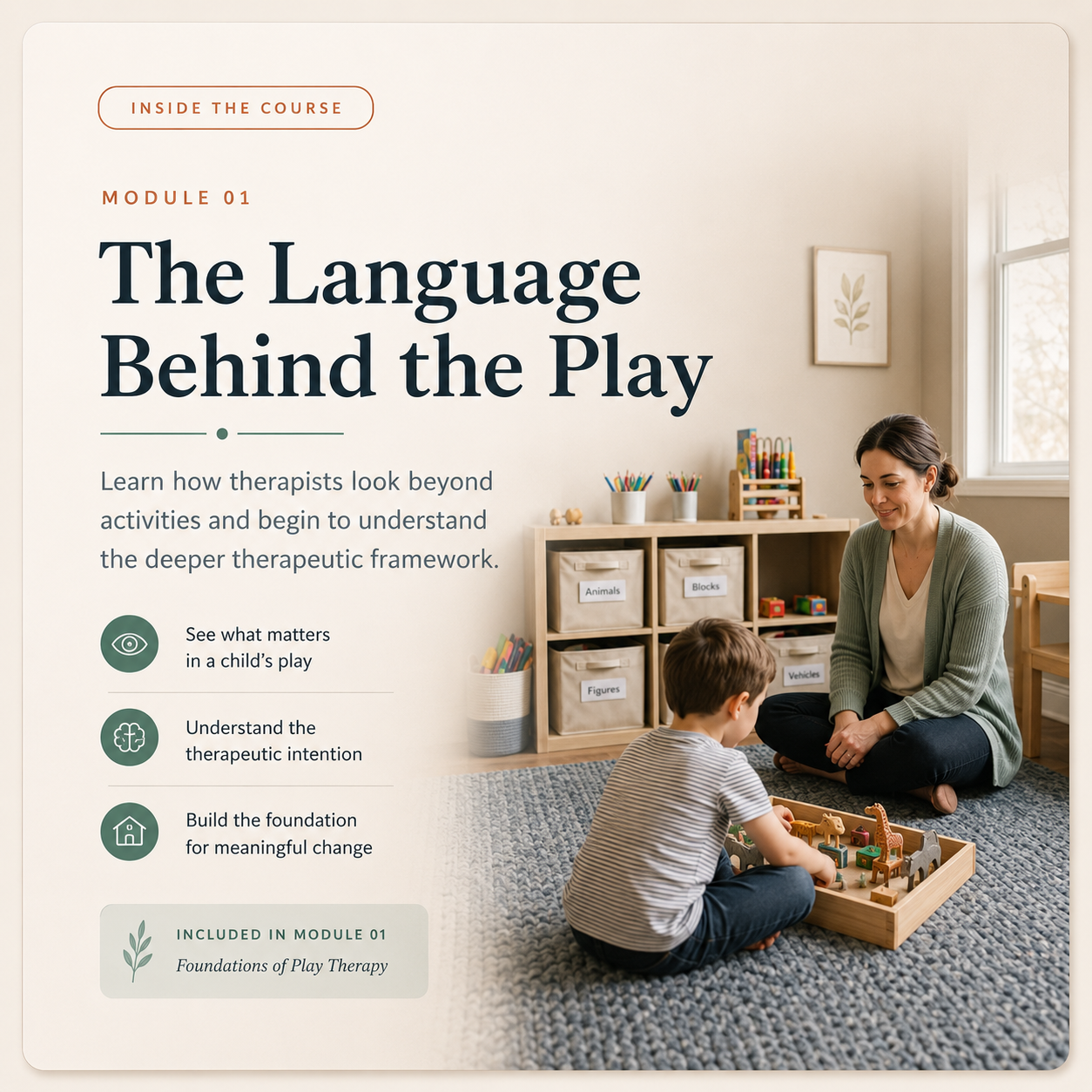
What experienced practitioners notice before they interpret anything.
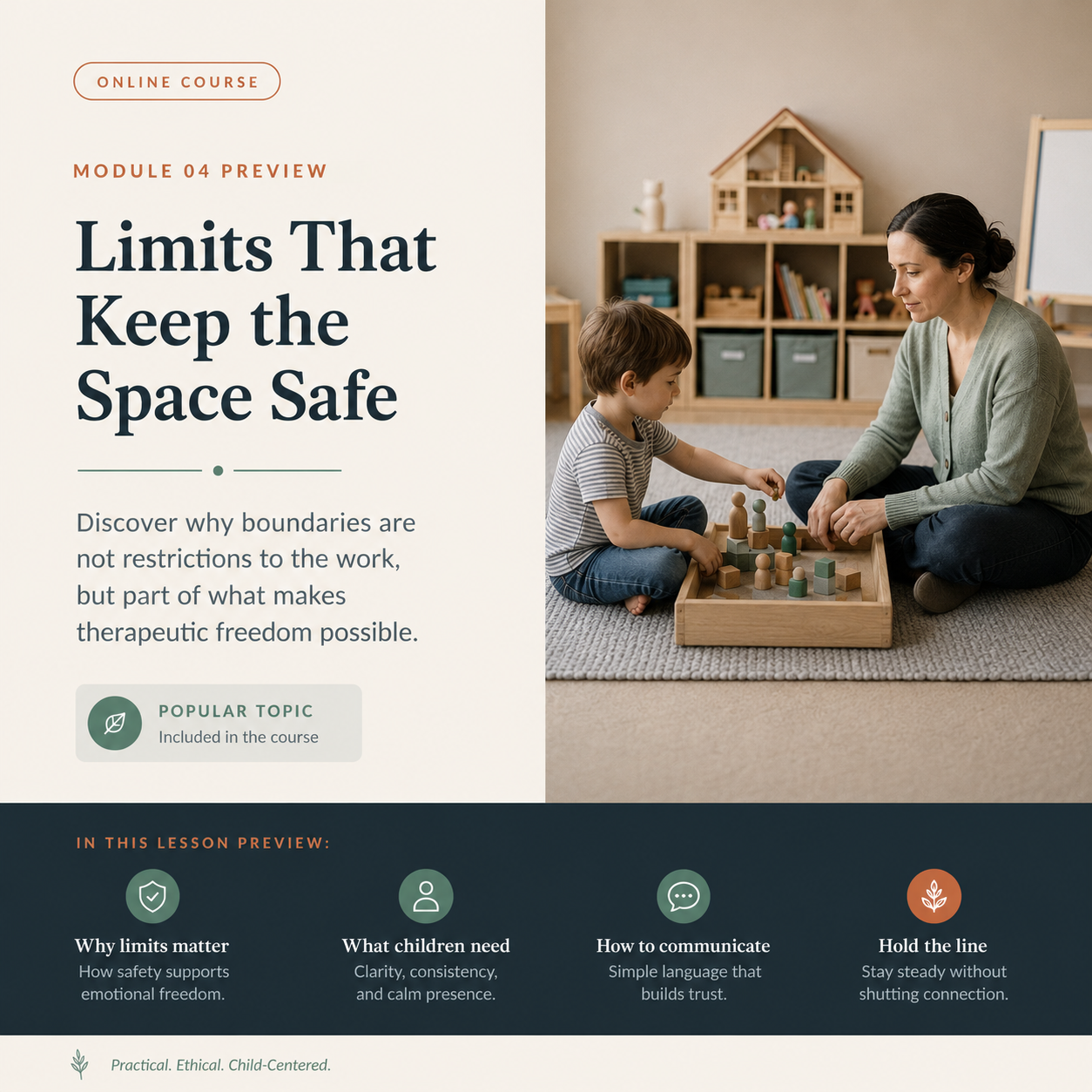
How context and patterns shape therapeutic decisions.

How the chosen approach changes the whole session.
Curriculum
Each chapter builds on the one before it. Open any section to see what it covers.
Establish what makes play therapeutic, how it differs from ordinary play, and the boundaries that shape responsible practice.
After this chapter you can explain what makes play therapeutic and where your professional limits sit.
The Experience
Watch
Professional video lessons with visual slides.
Understand
Complex concepts broken into structured frameworks.
Connect
Examples that show how concepts relate.
Apply
Finish each chapter with a clearer understanding of therapeutic reasoning.

Instructor

Dr. Emily Carter
Child & Play Therapy Educator
Feedback
Feedback from practitioners who have taken the course.
★★★★★
“I used to leave sessions wondering whether I had read the play correctly. The course gave me a way of thinking that I now use every single week, and my notes are far more specific than they were.”

Sarah Whitfield
Child Therapist, Portland, OR
★★★★★
“The chapters build on each other instead of throwing activities at you. By chapter four I was already changing how I set up the room and how I responded when a child went quiet.”

Marcus Bennett
School Counselor, Atlanta, GA
★★★★★
“Clear, calm and practical. The worked examples were the part that stuck with me, because they show the reasoning behind each choice rather than just the outcome.”

Daniela Rivas
Clinical Social Worker, San Diego, CA
How This Course Was Built
The curriculum was written by Dr. Emily Carter and sequenced around a single question: what does a practitioner need to understand, in what order, to reason about therapeutic play instead of copying activities?
Each chapter introduces a concept, connects it to developmental and relational context, and closes with worked example situations. Chapters build on each other, so nothing is introduced before the reasoning that supports it.
10
Chapters
40
Lesson topics
100%
Online
Why This Course
Random Online Information
Multi-Day Live Trainings
This Course at $37
The Complete Package
By the end of the course you will be able to:
Complete Play Therapy Course
Today
The introductory price keeps the course accessible while the program is new. The content is the complete course, not a reduced version of it.
One-time payment, no subscription [CONFIRM BEFORE PUBLISHING]
30-day money-back guarantee
Questions before buying? productadvice.info@gmail.com
FAQ
It is an online video course that introduces the principles, approaches and therapeutic reasoning behind purposeful therapeutic play, organized into ten structured chapters.
Questions before buying? productadvice.info@gmail.com
$97
$37